Wednesday, November 21, 2012

The Path To Freedom


  • Is human nature fundamentally good or bad
  • Can legislation change human behavior?
  • Should we seek gradual or immediate changes to society?
  • Can society be improved by active involvement or by withdrawal?
  • What makes the good society?

About: Harriet Ross was born into slavery in 1819 or 1820, in Dorchester County, Maryland. Given the names of her two parents, both held in slavery, she was of purely African ancestry. She was raised under harsh conditions, and subjected to whippings even as a small child. At the age of 12 she was seriously injured by a blow to the head, inflicted by a white overseer for refusing to assist in tying up a man who had attempted escape. At the age of 25, she married John Tubman, a free African American. Five years later, fearing she would be sold South, she made her escape.Tubman was given a piece of paper by a white neighbor with two names, and told how to find the first house on her path to freedom. At the first house she was put into a wagon, covered with a sack, and driven to her next destination.  In 1851 she began relocating members of her family to St. Catharine's, (Ontario) Canada West. North Street in St. Catharine's remained her base of operations until 1857. While there she worked at various activities to save to finance her activities as a Conductor on the UGRR, and attended the Salem Chapel BME Church on Geneva Street.

Human Nature can be good, but also bad when it is influence upon the law. When the law is commanding them to follow certain rules instead of what is right, then they are conveyed to not follow what they think is right. This however leads to the fact that legislation can lead to a change in human behavior. Until human behavior changes, people will still be TOO afraid, TOO oppressed, to speak out about abolishing slavery, and letting women have their rights. We need to seek gradual changes immediately because right now, the time period in which we are will be looked upon by thousands in future.  An idyllic or good society is one that is actually for the people. Right now, we are constantly being told that society is for the people but it is only including a certain group of people. ":For the People" is excluding women and slaves. Is that a "For the People" government?

Friday, November 16, 2012

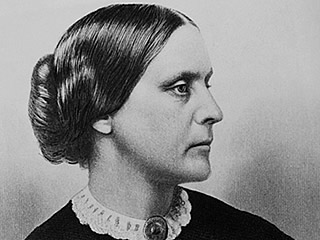
"Failure is Possible," said Susan B. Anthony


  • Is human nature fundamentally good or bad
  • Can legislation change human behavior?
  • Should we seek gradual or immediate changes to society?
  • Can society be improved by active involvement or by withdrawal?
  • What makes the good society?People who represent the Feminism and Abolitionist movements. Legislation can change the human behavior because the laws that they decide will take a tremendous effect on the individual. They will also determine her woman's right swill be placed upon in the future.The good and evil that you see don't even exist in reality, at least not outside of the mind that believes in them. They are only judgments passed by the individual from their own unique perspective. What one person sees as bad or evil may seem to be the only logical thing to do from some other perspective. The ideas of both good and evil are point of view specific. This is why people like bush and bin laden are either loved or hated. Bush was seen as good by people who shared his fear based thought system. Those who have a compassionate concern for all of mankind often saw him as evil.We should seek changes to society immediately because in this time period specifically, we are influencing the nation that will be governed for years to come. Our main priority is to set the standard of equality for all, and actually meaning it. By involvement, society is the only way it will ameliorate because if we don't get involved, our voices won't be heard. Women won't get their voting and educational rights that they deserve.  Susan B. Anthony dedicated her life to "the cause," the woman suffrage movement. The accomplishments of Susan B. Anthony paved the way for the passage of the Nineteenth Amendment in 1920 (14 years after her death) which gave women the right to vote. The influential Susan B. Anthony was born on February 15, 1820 in Adams, Massachusetts.
    In the 1800s most girls did not receive a formal education. But, Susan B. Anthony's father, Daniel, as a 6th generation Quaker, believed in equal treatment for boys and girls. Consequently, Susan and her three sisters had the same opportunity for advanced education as her two brothers. Susan was fortunate enough to be given the chance to attend a private Quaker boarding school in Philadelphia. 

    Accomplishments:
    • Founded the National Woman's Suffrage Association in 1869 with life-long friend Elizabeth Cady Stanton. Together they worked for women's suffrage for over 50 years.
    • Published "The Revolution" from 1868-1870, a weekly paper about the woman suffrage movement whose motto read, "Men their rights and nothing more, women their rights and nothing less.
    • First person arrested, put on trial and fined for voting on November 5, 1872. Unable to speak in her defense she refuse to pay "a dollar of your unjust penalty."
    • Wrote the Susan B. Anthony Amendment in 1878 which later became the 19th Amendment giving women the right to vote.
    • Helped found the National American Woman's Suffrage Association in 1890 which focused on a national amendment to secure women the vote. She served as president until 1900.
    • Compiled and published "The History of Woman Suffrage (4 vols. 1881-1902) with Elizabeth Cady Stanton and Matilda Joslyn Gage.
    • Founded the International Council of Women (1888) and the International Woman Suffrage Council (1904) which brought international attention to suffrage.
    • An organization genius -- her canvassing plan is still used today by grass root and political organizations.
    • Gave 75-100 speeches a year for 45 years, traveling throughout the the United States by stage coach, wagon, carriage and train.
    • Led the only non-violent revolution in our country's history -- the 72 year struggle to win women the right to vote.
    Anthony died in Rochester New York of pneumonia and heart failure on  March 13, 1906.


Monday, November 12, 2012

Commonwealth v. Hunt (1842)


  • Explain the role of the Supreme Court interpreting the Constitution, the concept of judicial review, and how this case is modified to it. 


Within the Supreme court Judicial Review, is also it's final say, the constitutionality of a law or action relevant to a case under its review. 

The main functions of the Supreme Court are to: 

  1. Settle disputes between states.
  2. Hear appeals from state and federal courts.
  3. Determine the constitutionality of federal laws.
The difference between this case and the Ogden v. Gibbon case was that this was took place in the State of Massachusetts instead of New York.  Massachusetts Supreme Court case Commonwealth v. Hunt, 45 Mass. 111, 4 Met. (1842)  involved the union organization practices during the mid-19th-century industrial era. I also strongly believe that this case tremendously influenced the modern unions today. 

Hunt and six representatives of the Boston Boot Makers Union called a strike against a local manufacturer for hiring non-union workers in an attempt to pressure the owner to create a closed, I guess you can say a more privatized  shop. In addition to organizing a protest, Hunt and his fellow organizers were arrested convicted under an old English common law practice prohibiting all forms of restraint of trade, and condemning unionization as a criminal conspiracy. 
Commonwealth v. Hunt was an unusual departure from the pro-business rulings that predominated during that time. This case is highly important because it had an immediate impact on labor laws in the United States. Both the courts and legislature continued to favor business interests over workers until the 1920s and 30s. 

The Gibbons v. Ogden Case (1824)

  • Explain the role of the supreme Court in interpreting the Constitution, the concept of judicial review, and how this case modified it. 
The Supreme Court of the United States has the ultimate responsibility for settling disputes and interpreting the meaning of laws. It also determines what national policy will be when it applies law to specific disputes. 

The Supreme Court has the final say on all legal matters that come to it. Additionally, it is the highest court in our system and there is no appeal from its decisions unless future courts reverse past court decisions. The Gibbons v. Ogden (1824) vastly expanded the powers of Congress through a single clause in the Constitution: the Commerce Clause of Article I, Section 8. Without the presence of this case, those powers would have been never been explored upon.  After the Ogden v.Gibbons case, the Supreme Court ruled that under that clause Congress had powers to regulate any aspect of commerce that crossed state lines, including modes of transportation, and that such regulation preempted conflicting regulation by the states. Since Gibbons, the Commerce Clause has provided the basis for sweeping congressional power over a multitude of national issues.

 The state of New York gave Aaron Ogden an exclusive license to operate steamboat ferries between New Jersey and New York City on the Hudson River. Thomas Gibbons, another steamboat operator, ran two ferries along the same route. Ogden, then decided to go  


In conclusion, the Court interpreted the Commerce Clause of the U.S. Constitution for the first time. "Congress shall have power to regulate commerce ... among the several States," said the commerce clause.  


Monday, October 15, 2012

The Man Who Has Done It All, John Langdon


This is a photo of John Langdon.


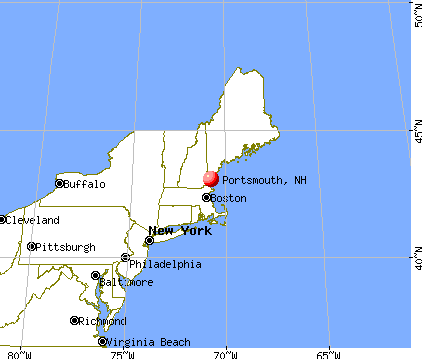
John Langdon. Who is John Langdon? To the lower class, he was not people's most favorite person. But to the upper class however, this was just simply another one of them. Another one, that would eventually end up representing them for upcoming Constitutional Convention or whenever it was the time to maker important decisions. He was born on June 26, 1741 in Portsmouth New  Hampshire. He was born during the period after The Great Awakening was slowly coming to an end. [We all can take back a journey to memory lane, where people were slowly being allowed to publicly express their religion, but it's better if we just keep it that way.]

Portsmouth, New Hampshire:Location of Birth of John Langdon
While growing up, he  attended the local grammar school; served an apprenticeship as a clerk. Later on, he  went to sea, and engaged in mercantile pursuits;which, eventually led him to becoming another "upper class" rich white man. 

John Langdon, was a prominent supporter of the revolutionary movement and active in the Revolutionary War contributing towards being a member of the  Member of the Continental Congress in 1775 and 1776. These were extremely crucial and important time periods within the nation because the Declaration of Independence was being signed by influential individuals such as Thomas Jefferson and John Adams. 

Langdon unfortunately resigned in June 1776 to become an agent for Continental prizes and superintended the construction of several ships of war.
 He was greatly remembered at the Continental Congress as he had served several terms as speaker of the State house of representatives, and during the session of 1777 staked his fortune to equip an expedition against the British. 

In a way, I guess you can say that John Langdon pretty much did it all throughout his life. He did anything anyone win today's society would dream of doing. After leaving the Continental Congress, he participated in the Battle of Bennington and commanded a company at Saratoga. 

Here a few key points to keep in mind about John Langdon, you're welcome. 


  • Rhode Island member of the State Senate 1784
  •  President of New Hampshire 1785-1788
  •  Once again a Member of the Continental Congress in 1787
  • delegate to the Federal Constitutional Convention in 1787 
  •  elected to the United States Senate and served from March 4, 1789, to March 3, 1801 
  • also served as President pro tempore of the Senate during the Second Congress
  •  declined to accept the portfolio of Secretary of the Navy in the Cabinet of President Thomas Jefferson in 1801
  •  Member, New Hampshire legislature from 1801-1805, the last two terms as speaker
  •  Governor of New Hampshire 1805-1811, with the exception of 1809
Woah. At some point, that list had to end. Politicians were going around in circles switching role or reprising their roles as powerful men in the Continental Congress. This man was so successful that he even was nominated for Vice President candidate in 1812. Unfortunately, he declined the nomination. 

John Langdon died in the same location where he was born. Coincidentally? Maybe.  He died in Portsmouth, N.H., September 18, 1819 and is 6 feet below the ground at the Langdon tomb in the North Cemetery.

Wednesday, October 3, 2012

The Great Awakening:Reflection

This is the final "reflection" blog for this section. The First Great Awakening, occurring around 1730s  and  1740s, had a profound impact on the course of the United States. Although not widely spoken of in modern times, the Great Awakening was a movement rooted in spiritual growth which brought a religious  identity to Colonial America. Christians, Quakers, and Puritans wanted to express themselves. The Declaration of Independence inculcated for the "social compact."

 Influential preachers like Jonathan Edwards who wrote the powerful speech "Sinners in the Hands of an Angry God," had a tremendous impact throughout the Great Awakening. It encouraged people to express their beliefs, which in England at the time was mostly Christianity. 

Question: Compare the ways in which religion shaped the development of colonial society (to 1740) in two of the following regions:New England,Chesapeake,Middle Atlantic

Thesis:During the 1730s and the 1740s, the mother country went through a series of revolutions that fought for religious freedom and therefore crossed social,political, and economic changes. The Great Awakening was major impact to the New England colonies and shaped their society and caused, many colonist to creativity. 


Through the Awakening, the Colonists realized that religious power resided in their own hands, rather than in the hands of the Church of England, or any other religious authority.This goes back to Johnathan Edwards and another preacher George Whitefield.  After a generation or two passed with this kind of mindset, the Colonists came to realize that political power did not reside in the hands of the English monarch, but in their own will for self-governance (consider the wording of the Declaration of Independence). 

By 1775, even though the Colonists did not all share the same theological beliefs; they did share a common vision of freedom from British control.

Tuesday, October 2, 2012

The Atlantic Slave Trade:Reflection

The Atlantic Salve Trade, also known as Triangular Trade, is the import and export route that is literally in the shape of a triangle. The Atlantic slave trade took place between Africa and the West Indies. This route bough together Native American, Indians, and the Africans. Merchants were typically the ones that made up the Atlantic Slave Trade route. The thing that made Africa a powerful kingdom  so powerful was that they had one thing--Gold, and everyone wanted it. 

Slaves were shipped off  in the form of what was called, "loose/tight packing." Basically, people  slaves, were placed upon a ship, like a bunch of "sardines" stacked on top of each other, and it all depended to see who would survive. 

Question: How did economic,geographical, and social factors encourage the growth of slavery as an important part of the economy between 1607 and 1775 in the Southern colonies. [Southern colonies: Virginia, North/South Carolina's, and Georgia.
Thesis: Between 1607 and 1775, slavery in the Southern colonies grew up resulting from was the 
"necessity" of profit. Blacks were humanely treated, leading to the American relying on profitable plantation systems that were relying on slavery;thus, creating a social system on race. 

The Religious Society of Friends AKA The Quakers, whom William Willowburforce helped propose the Slave Trade Act of 1794. The act didn't allow ships to be used for slave trade. 

In 1807, Congress would outlaw implementation of slaves. On January 1st,1808 the aw was officially implemented. This became to the contribution to the Treaty of Paris. France and England would outlaw slavery in 1814.