Monday, October 15, 2012

The Man Who Has Done It All, John Langdon


This is a photo of John Langdon.


John Langdon. Who is John Langdon? To the lower class, he was not people's most favorite person. But to the upper class however, this was just simply another one of them. Another one, that would eventually end up representing them for upcoming Constitutional Convention or whenever it was the time to maker important decisions. He was born on June 26, 1741 in Portsmouth New  Hampshire. He was born during the period after The Great Awakening was slowly coming to an end. [We all can take back a journey to memory lane, where people were slowly being allowed to publicly express their religion, but it's better if we just keep it that way.]
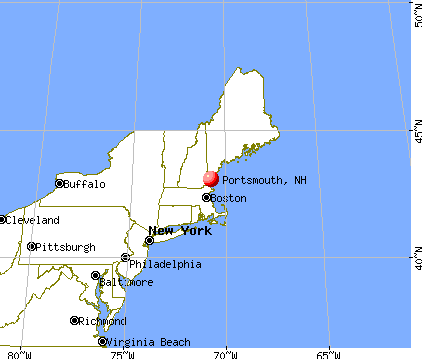
Portsmouth, New Hampshire:Location of Birth of John Langdon
While growing up, he  attended the local grammar school; served an apprenticeship as a clerk. Later on, he  went to sea, and engaged in mercantile pursuits;which, eventually led him to becoming another "upper class" rich white man. 

John Langdon, was a prominent supporter of the revolutionary movement and active in the Revolutionary War contributing towards being a member of the  Member of the Continental Congress in 1775 and 1776. These were extremely crucial and important time periods within the nation because the Declaration of Independence was being signed by influential individuals such as Thomas Jefferson and John Adams. 

Langdon unfortunately resigned in June 1776 to become an agent for Continental prizes and superintended the construction of several ships of war.
 He was greatly remembered at the Continental Congress as he had served several terms as speaker of the State house of representatives, and during the session of 1777 staked his fortune to equip an expedition against the British. 

In a way, I guess you can say that John Langdon pretty much did it all throughout his life. He did anything anyone win today's society would dream of doing. After leaving the Continental Congress, he participated in the Battle of Bennington and commanded a company at Saratoga. 

Here a few key points to keep in mind about John Langdon, you're welcome. 


  • Rhode Island member of the State Senate 1784
  •  President of New Hampshire 1785-1788
  •  Once again a Member of the Continental Congress in 1787
  • delegate to the Federal Constitutional Convention in 1787 
  •  elected to the United States Senate and served from March 4, 1789, to March 3, 1801 
  • also served as President pro tempore of the Senate during the Second Congress
  •  declined to accept the portfolio of Secretary of the Navy in the Cabinet of President Thomas Jefferson in 1801
  •  Member, New Hampshire legislature from 1801-1805, the last two terms as speaker
  •  Governor of New Hampshire 1805-1811, with the exception of 1809
Woah. At some point, that list had to end. Politicians were going around in circles switching role or reprising their roles as powerful men in the Continental Congress. This man was so successful that he even was nominated for Vice President candidate in 1812. Unfortunately, he declined the nomination. 

John Langdon died in the same location where he was born. Coincidentally? Maybe.  He died in Portsmouth, N.H., September 18, 1819 and is 6 feet below the ground at the Langdon tomb in the North Cemetery.

Wednesday, October 3, 2012

The Great Awakening:Reflection

This is the final "reflection" blog for this section. The First Great Awakening, occurring around 1730s  and  1740s, had a profound impact on the course of the United States. Although not widely spoken of in modern times, the Great Awakening was a movement rooted in spiritual growth which brought a religious  identity to Colonial America. Christians, Quakers, and Puritans wanted to express themselves. The Declaration of Independence inculcated for the "social compact."

 Influential preachers like Jonathan Edwards who wrote the powerful speech "Sinners in the Hands of an Angry God," had a tremendous impact throughout the Great Awakening. It encouraged people to express their beliefs, which in England at the time was mostly Christianity. 

Question: Compare the ways in which religion shaped the development of colonial society (to 1740) in two of the following regions:New England,Chesapeake,Middle Atlantic

Thesis:During the 1730s and the 1740s, the mother country went through a series of revolutions that fought for religious freedom and therefore crossed social,political, and economic changes. The Great Awakening was major impact to the New England colonies and shaped their society and caused, many colonist to creativity. 


Through the Awakening, the Colonists realized that religious power resided in their own hands, rather than in the hands of the Church of England, or any other religious authority.This goes back to Johnathan Edwards and another preacher George Whitefield.  After a generation or two passed with this kind of mindset, the Colonists came to realize that political power did not reside in the hands of the English monarch, but in their own will for self-governance (consider the wording of the Declaration of Independence). 

By 1775, even though the Colonists did not all share the same theological beliefs; they did share a common vision of freedom from British control.

Tuesday, October 2, 2012

The Atlantic Slave Trade:Reflection

The Atlantic Salve Trade, also known as Triangular Trade, is the import and export route that is literally in the shape of a triangle. The Atlantic slave trade took place between Africa and the West Indies. This route bough together Native American, Indians, and the Africans. Merchants were typically the ones that made up the Atlantic Slave Trade route. The thing that made Africa a powerful kingdom  so powerful was that they had one thing--Gold, and everyone wanted it. 

Slaves were shipped off  in the form of what was called, "loose/tight packing." Basically, people  slaves, were placed upon a ship, like a bunch of "sardines" stacked on top of each other, and it all depended to see who would survive. 

Question: How did economic,geographical, and social factors encourage the growth of slavery as an important part of the economy between 1607 and 1775 in the Southern colonies. [Southern colonies: Virginia, North/South Carolina's, and Georgia.
Thesis: Between 1607 and 1775, slavery in the Southern colonies grew up resulting from was the 
"necessity" of profit. Blacks were humanely treated, leading to the American relying on profitable plantation systems that were relying on slavery;thus, creating a social system on race. 

The Religious Society of Friends AKA The Quakers, whom William Willowburforce helped propose the Slave Trade Act of 1794. The act didn't allow ships to be used for slave trade. 

In 1807, Congress would outlaw implementation of slaves. On January 1st,1808 the aw was officially implemented. This became to the contribution to the Treaty of Paris. France and England would outlaw slavery in 1814.

Reflecting on The Glorious Revolution

The colonists and the British obviously did not know that a Glorious Revolution was going to blow up right before their eyes. Within this presentation, they focused on the events that occurred during the Revolution. The Revolution, also called the Revolution of 1688, or the Bloodless Revolution,  took place between the 1600s and mid 1700s, took place in England. Bottom line: It was a competition to see which country had greater colonial power. 

Question: Analyze the way in which British Imperial policies between 1763 and 1776 intensified colonials resistance to British rule and their commitment to republican vales.


We learned about James II was thrown out of power because he tried to impose the roman Catholic. This created an accession of his daughter Mary II and her husband William II Prince, but on the contrary to James II, they were Protestant. One of the things that they legalized in England was the toleration Act  of 1763.


King James's policies of religious tolerance after 1685 met with increasing opposition by members of leading political circles, who were troubled by the king's Catholicism and his close ties with France. The crisis facing the king came to a head in 1688, with the birth of the King's son, James Francis Stuart, on June 10th. Some of the most influential leaders of the Tories united members of the opposition Whigs and set out to resolve the crisis by inviting William of Orange to England.

The Revolution permanently ended Catholicism in England. For British Catholics its effects were disastrous both socially and politically. 
 It has been argued that James's overthrow began modern English Parliamentary system. The Bill of Rights of 1689 has become one of the most important documents in the political hisotry of Britain and never since has the monarch held absolute power