Wednesday, November 21, 2012

The Path To Freedom


  • Is human nature fundamentally good or bad
  • Can legislation change human behavior?
  • Should we seek gradual or immediate changes to society?
  • Can society be improved by active involvement or by withdrawal?
  • What makes the good society?

About: Harriet Ross was born into slavery in 1819 or 1820, in Dorchester County, Maryland. Given the names of her two parents, both held in slavery, she was of purely African ancestry. She was raised under harsh conditions, and subjected to whippings even as a small child. At the age of 12 she was seriously injured by a blow to the head, inflicted by a white overseer for refusing to assist in tying up a man who had attempted escape. At the age of 25, she married John Tubman, a free African American. Five years later, fearing she would be sold South, she made her escape.Tubman was given a piece of paper by a white neighbor with two names, and told how to find the first house on her path to freedom. At the first house she was put into a wagon, covered with a sack, and driven to her next destination.  In 1851 she began relocating members of her family to St. Catharine's, (Ontario) Canada West. North Street in St. Catharine's remained her base of operations until 1857. While there she worked at various activities to save to finance her activities as a Conductor on the UGRR, and attended the Salem Chapel BME Church on Geneva Street.

Human Nature can be good, but also bad when it is influence upon the law. When the law is commanding them to follow certain rules instead of what is right, then they are conveyed to not follow what they think is right. This however leads to the fact that legislation can lead to a change in human behavior. Until human behavior changes, people will still be TOO afraid, TOO oppressed, to speak out about abolishing slavery, and letting women have their rights. We need to seek gradual changes immediately because right now, the time period in which we are will be looked upon by thousands in future.  An idyllic or good society is one that is actually for the people. Right now, we are constantly being told that society is for the people but it is only including a certain group of people. ":For the People" is excluding women and slaves. Is that a "For the People" government?

Friday, November 16, 2012

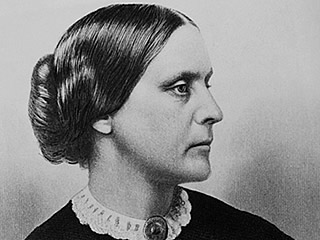
"Failure is Possible," said Susan B. Anthony


  • Is human nature fundamentally good or bad
  • Can legislation change human behavior?
  • Should we seek gradual or immediate changes to society?
  • Can society be improved by active involvement or by withdrawal?
  • What makes the good society?People who represent the Feminism and Abolitionist movements. Legislation can change the human behavior because the laws that they decide will take a tremendous effect on the individual. They will also determine her woman's right swill be placed upon in the future.The good and evil that you see don't even exist in reality, at least not outside of the mind that believes in them. They are only judgments passed by the individual from their own unique perspective. What one person sees as bad or evil may seem to be the only logical thing to do from some other perspective. The ideas of both good and evil are point of view specific. This is why people like bush and bin laden are either loved or hated. Bush was seen as good by people who shared his fear based thought system. Those who have a compassionate concern for all of mankind often saw him as evil.We should seek changes to society immediately because in this time period specifically, we are influencing the nation that will be governed for years to come. Our main priority is to set the standard of equality for all, and actually meaning it. By involvement, society is the only way it will ameliorate because if we don't get involved, our voices won't be heard. Women won't get their voting and educational rights that they deserve.  Susan B. Anthony dedicated her life to "the cause," the woman suffrage movement. The accomplishments of Susan B. Anthony paved the way for the passage of the Nineteenth Amendment in 1920 (14 years after her death) which gave women the right to vote. The influential Susan B. Anthony was born on February 15, 1820 in Adams, Massachusetts.
    In the 1800s most girls did not receive a formal education. But, Susan B. Anthony's father, Daniel, as a 6th generation Quaker, believed in equal treatment for boys and girls. Consequently, Susan and her three sisters had the same opportunity for advanced education as her two brothers. Susan was fortunate enough to be given the chance to attend a private Quaker boarding school in Philadelphia. 

    Accomplishments:
    • Founded the National Woman's Suffrage Association in 1869 with life-long friend Elizabeth Cady Stanton. Together they worked for women's suffrage for over 50 years.
    • Published "The Revolution" from 1868-1870, a weekly paper about the woman suffrage movement whose motto read, "Men their rights and nothing more, women their rights and nothing less.
    • First person arrested, put on trial and fined for voting on November 5, 1872. Unable to speak in her defense she refuse to pay "a dollar of your unjust penalty."
    • Wrote the Susan B. Anthony Amendment in 1878 which later became the 19th Amendment giving women the right to vote.
    • Helped found the National American Woman's Suffrage Association in 1890 which focused on a national amendment to secure women the vote. She served as president until 1900.
    • Compiled and published "The History of Woman Suffrage (4 vols. 1881-1902) with Elizabeth Cady Stanton and Matilda Joslyn Gage.
    • Founded the International Council of Women (1888) and the International Woman Suffrage Council (1904) which brought international attention to suffrage.
    • An organization genius -- her canvassing plan is still used today by grass root and political organizations.
    • Gave 75-100 speeches a year for 45 years, traveling throughout the the United States by stage coach, wagon, carriage and train.
    • Led the only non-violent revolution in our country's history -- the 72 year struggle to win women the right to vote.
    Anthony died in Rochester New York of pneumonia and heart failure on  March 13, 1906.


Monday, November 12, 2012

Commonwealth v. Hunt (1842)


  • Explain the role of the Supreme Court interpreting the Constitution, the concept of judicial review, and how this case is modified to it. 


Within the Supreme court Judicial Review, is also it's final say, the constitutionality of a law or action relevant to a case under its review. 

The main functions of the Supreme Court are to: 

  1. Settle disputes between states.
  2. Hear appeals from state and federal courts.
  3. Determine the constitutionality of federal laws.
The difference between this case and the Ogden v. Gibbon case was that this was took place in the State of Massachusetts instead of New York.  Massachusetts Supreme Court case Commonwealth v. Hunt, 45 Mass. 111, 4 Met. (1842)  involved the union organization practices during the mid-19th-century industrial era. I also strongly believe that this case tremendously influenced the modern unions today. 

Hunt and six representatives of the Boston Boot Makers Union called a strike against a local manufacturer for hiring non-union workers in an attempt to pressure the owner to create a closed, I guess you can say a more privatized  shop. In addition to organizing a protest, Hunt and his fellow organizers were arrested convicted under an old English common law practice prohibiting all forms of restraint of trade, and condemning unionization as a criminal conspiracy. 
Commonwealth v. Hunt was an unusual departure from the pro-business rulings that predominated during that time. This case is highly important because it had an immediate impact on labor laws in the United States. Both the courts and legislature continued to favor business interests over workers until the 1920s and 30s. 

The Gibbons v. Ogden Case (1824)

  • Explain the role of the supreme Court in interpreting the Constitution, the concept of judicial review, and how this case modified it. 
The Supreme Court of the United States has the ultimate responsibility for settling disputes and interpreting the meaning of laws. It also determines what national policy will be when it applies law to specific disputes. 

The Supreme Court has the final say on all legal matters that come to it. Additionally, it is the highest court in our system and there is no appeal from its decisions unless future courts reverse past court decisions. The Gibbons v. Ogden (1824) vastly expanded the powers of Congress through a single clause in the Constitution: the Commerce Clause of Article I, Section 8. Without the presence of this case, those powers would have been never been explored upon.  After the Ogden v.Gibbons case, the Supreme Court ruled that under that clause Congress had powers to regulate any aspect of commerce that crossed state lines, including modes of transportation, and that such regulation preempted conflicting regulation by the states. Since Gibbons, the Commerce Clause has provided the basis for sweeping congressional power over a multitude of national issues.

 The state of New York gave Aaron Ogden an exclusive license to operate steamboat ferries between New Jersey and New York City on the Hudson River. Thomas Gibbons, another steamboat operator, ran two ferries along the same route. Ogden, then decided to go  


In conclusion, the Court interpreted the Commerce Clause of the U.S. Constitution for the first time. "Congress shall have power to regulate commerce ... among the several States," said the commerce clause.  


Monday, October 15, 2012

The Man Who Has Done It All, John Langdon


This is a photo of John Langdon.


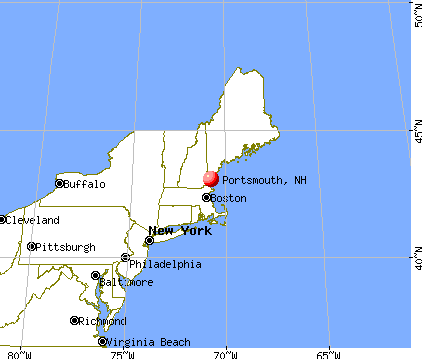
John Langdon. Who is John Langdon? To the lower class, he was not people's most favorite person. But to the upper class however, this was just simply another one of them. Another one, that would eventually end up representing them for upcoming Constitutional Convention or whenever it was the time to maker important decisions. He was born on June 26, 1741 in Portsmouth New  Hampshire. He was born during the period after The Great Awakening was slowly coming to an end. [We all can take back a journey to memory lane, where people were slowly being allowed to publicly express their religion, but it's better if we just keep it that way.]

Portsmouth, New Hampshire:Location of Birth of John Langdon
While growing up, he  attended the local grammar school; served an apprenticeship as a clerk. Later on, he  went to sea, and engaged in mercantile pursuits;which, eventually led him to becoming another "upper class" rich white man. 

John Langdon, was a prominent supporter of the revolutionary movement and active in the Revolutionary War contributing towards being a member of the  Member of the Continental Congress in 1775 and 1776. These were extremely crucial and important time periods within the nation because the Declaration of Independence was being signed by influential individuals such as Thomas Jefferson and John Adams. 

Langdon unfortunately resigned in June 1776 to become an agent for Continental prizes and superintended the construction of several ships of war.
 He was greatly remembered at the Continental Congress as he had served several terms as speaker of the State house of representatives, and during the session of 1777 staked his fortune to equip an expedition against the British. 

In a way, I guess you can say that John Langdon pretty much did it all throughout his life. He did anything anyone win today's society would dream of doing. After leaving the Continental Congress, he participated in the Battle of Bennington and commanded a company at Saratoga. 

Here a few key points to keep in mind about John Langdon, you're welcome. 


  • Rhode Island member of the State Senate 1784
  •  President of New Hampshire 1785-1788
  •  Once again a Member of the Continental Congress in 1787
  • delegate to the Federal Constitutional Convention in 1787 
  •  elected to the United States Senate and served from March 4, 1789, to March 3, 1801 
  • also served as President pro tempore of the Senate during the Second Congress
  •  declined to accept the portfolio of Secretary of the Navy in the Cabinet of President Thomas Jefferson in 1801
  •  Member, New Hampshire legislature from 1801-1805, the last two terms as speaker
  •  Governor of New Hampshire 1805-1811, with the exception of 1809
Woah. At some point, that list had to end. Politicians were going around in circles switching role or reprising their roles as powerful men in the Continental Congress. This man was so successful that he even was nominated for Vice President candidate in 1812. Unfortunately, he declined the nomination. 

John Langdon died in the same location where he was born. Coincidentally? Maybe.  He died in Portsmouth, N.H., September 18, 1819 and is 6 feet below the ground at the Langdon tomb in the North Cemetery.

Wednesday, October 3, 2012

The Great Awakening:Reflection

This is the final "reflection" blog for this section. The First Great Awakening, occurring around 1730s  and  1740s, had a profound impact on the course of the United States. Although not widely spoken of in modern times, the Great Awakening was a movement rooted in spiritual growth which brought a religious  identity to Colonial America. Christians, Quakers, and Puritans wanted to express themselves. The Declaration of Independence inculcated for the "social compact."

 Influential preachers like Jonathan Edwards who wrote the powerful speech "Sinners in the Hands of an Angry God," had a tremendous impact throughout the Great Awakening. It encouraged people to express their beliefs, which in England at the time was mostly Christianity. 

Question: Compare the ways in which religion shaped the development of colonial society (to 1740) in two of the following regions:New England,Chesapeake,Middle Atlantic

Thesis:During the 1730s and the 1740s, the mother country went through a series of revolutions that fought for religious freedom and therefore crossed social,political, and economic changes. The Great Awakening was major impact to the New England colonies and shaped their society and caused, many colonist to creativity. 


Through the Awakening, the Colonists realized that religious power resided in their own hands, rather than in the hands of the Church of England, or any other religious authority.This goes back to Johnathan Edwards and another preacher George Whitefield.  After a generation or two passed with this kind of mindset, the Colonists came to realize that political power did not reside in the hands of the English monarch, but in their own will for self-governance (consider the wording of the Declaration of Independence). 

By 1775, even though the Colonists did not all share the same theological beliefs; they did share a common vision of freedom from British control.

Tuesday, October 2, 2012

The Atlantic Slave Trade:Reflection

The Atlantic Salve Trade, also known as Triangular Trade, is the import and export route that is literally in the shape of a triangle. The Atlantic slave trade took place between Africa and the West Indies. This route bough together Native American, Indians, and the Africans. Merchants were typically the ones that made up the Atlantic Slave Trade route. The thing that made Africa a powerful kingdom  so powerful was that they had one thing--Gold, and everyone wanted it. 

Slaves were shipped off  in the form of what was called, "loose/tight packing." Basically, people  slaves, were placed upon a ship, like a bunch of "sardines" stacked on top of each other, and it all depended to see who would survive. 

Question: How did economic,geographical, and social factors encourage the growth of slavery as an important part of the economy between 1607 and 1775 in the Southern colonies. [Southern colonies: Virginia, North/South Carolina's, and Georgia.
Thesis: Between 1607 and 1775, slavery in the Southern colonies grew up resulting from was the 
"necessity" of profit. Blacks were humanely treated, leading to the American relying on profitable plantation systems that were relying on slavery;thus, creating a social system on race. 

The Religious Society of Friends AKA The Quakers, whom William Willowburforce helped propose the Slave Trade Act of 1794. The act didn't allow ships to be used for slave trade. 

In 1807, Congress would outlaw implementation of slaves. On January 1st,1808 the aw was officially implemented. This became to the contribution to the Treaty of Paris. France and England would outlaw slavery in 1814.

Reflecting on The Glorious Revolution

The colonists and the British obviously did not know that a Glorious Revolution was going to blow up right before their eyes. Within this presentation, they focused on the events that occurred during the Revolution. The Revolution, also called the Revolution of 1688, or the Bloodless Revolution,  took place between the 1600s and mid 1700s, took place in England. Bottom line: It was a competition to see which country had greater colonial power. 

Question: Analyze the way in which British Imperial policies between 1763 and 1776 intensified colonials resistance to British rule and their commitment to republican vales.


We learned about James II was thrown out of power because he tried to impose the roman Catholic. This created an accession of his daughter Mary II and her husband William II Prince, but on the contrary to James II, they were Protestant. One of the things that they legalized in England was the toleration Act  of 1763.


King James's policies of religious tolerance after 1685 met with increasing opposition by members of leading political circles, who were troubled by the king's Catholicism and his close ties with France. The crisis facing the king came to a head in 1688, with the birth of the King's son, James Francis Stuart, on June 10th. Some of the most influential leaders of the Tories united members of the opposition Whigs and set out to resolve the crisis by inviting William of Orange to England.

The Revolution permanently ended Catholicism in England. For British Catholics its effects were disastrous both socially and politically. 
 It has been argued that James's overthrow began modern English Parliamentary system. The Bill of Rights of 1689 has become one of the most important documents in the political hisotry of Britain and never since has the monarch held absolute power

Tuesday, September 25, 2012

My Reflection on The Enlightenment Presentation

     Day One of presentations in AP US History, and I must admit, I got a lot of good information with the first presentation by Fernanda,Astrid, and Stephany. Their presentation was primarily about the Enlightenment period. Before diving into the presentation, they question states, "Using the provided documents,explain how the Enlightenment period influenced the ideas of the American Revolution." Crafting the thesis is becoming a work that keeps going for all of us, and although it is frustrating, it takes time, and eventually we will get there.

Their thesis: "The Enlightenment influenced the American Revolution in three different forms;ideologies,the Declaration of Independence and the Constitution." This is the original thesis, not the thesis that was re-written after we edited as a class. 

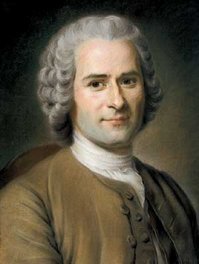
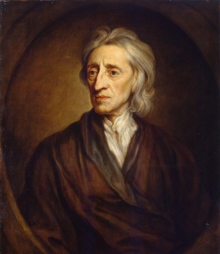
Throughout the presentation, we got introduced to the influential individuals during the Enlightenment period. Thomas Hobbes, John Locke, and Jean Jacques Rousseau, were heavily involved during that time period, and still have impacted our society today.
Jean Jacques Rousseau, "The Social Contract"

Jean Jacques Rousseau's political philosophy influenced the French Revolution as well as the overall development of modern political, sociological and educational thought. Additionally, Rousseau introduced "The Social Contract," which elaborates the idea of the idyllic freedom. Basically, in order for someone to get their rights, they would have to sign a form known as "The Social Contract," which gave people their rights. This sounds too good to be true right? Of course, signing "the Social Contract" has its perk-- isolate yourself from society. So much for freedom, after all. I was shocked by what I had learned because I realized that "FREEDOM" was not freedom so much after all. 


John Locke
John Locke introduced the idea of Natural Rights which he strongly believed in and were Life,Liberty, and the Property. When philosophers were getting together to write the Declaration of Independence, they incorporated Locke's similar beliefs into it. 
"We hold these truths to be self-evident, that all men are created equal, that they are endowed by their Creator with certain unalienable Rights, that among these are Life, Liberty and the pursuit of Happiness." However, instead of keeping the property part, they changed it to the Pursuit of Happiness because maybe "property" was not intended for everyone-- for "WE THE PEOPLE."

Those are the characters we introduced to within the presentation. I tremendously got the "The Social Contract" information cleared up in my head because I was always unsure about what it meant. During our Sophomore year, we had went into the Enlightenment and the complete list of the most influential philosophers but I had forgotten most of it, and this was a great way to get my memory refreshed. I know that for the AP exam, the graders aren't going to be as nice when it comes to the scoring,but this was a great way to learn from mistakes,and to not make them happen once again.


Thursday, September 13, 2012

The First Governor of The Massachusetts Bay Colony


I am English Puritan New World leader  John Winthrop, and was born January 12, 1588 – March 26, 1649) . Throughout my life, I was well known for accomplishing the grueling task of officially joining the Massachusetts Bay Colony in 1629 and was also elected the first governor on April 8, 1630.


When I became governor, I delivered, in an angry tone, my sermon "A city Upon A Hill." It states that the Americas are setting the stage religious wise for others to follow and learn from. God has destined everyone to suffer from the unprecedented events and happenings from Hell.

 Additionally, I was know to be a religious Christian and believed that the Anglican Church had to be cleansed of Catholic ritual.English Puritans needed a shelter away from England where they could remain safe during the time of God’s wrath, and I was going to help them find a relief towards the Catholic ritual.I declared that the Puritan colonists emigrating to the New World were part of a special pact with God to create a holy community. They were going to be influential for generations
 to come.

During my term for being the Governor, I was one of the least radical of the Puritans. People liked me because  the number of executions were being maintained at a minimum and was working towards preventing the implementation of more conservative practices such as veiling women.


In total I married 4 times, and had a total of 13 children.

·         Mary Forth, was my first wife, and we married on April 16, 1605 at Great Stambridge, Essex, England. She bore him six children and died in June 1615. The youngest son became the Governor of Connecticut in a later stage of life.
·         Thomasine Clopton, was my second wife. We got married  on December 6, 1615, at Groton, Suffolk, England. Unfortunately, the love of my life at the time died on December 8, 1616. We did not have any children.
·         I married  Margaret Tyndal, my third wife on April 29,1968. I had the most children with Margaret Tyndall , as together we engendered  six children in England before the family emigrated to New England .Many people don’t know this but, one of my daughters died on the Lyon voyage. Two children were born to them in New England in 1630. Margaret died on June 14, 1647.
·         Finally, I married Martha Rainsborough, who was a widow of Thomas Coytmore. In this marriage however, we did not have more than one son and that was in 1648.


I  signed the Cambridge Agreement March 4, 1629,to embark on the next voyage and find a new Puritan colony in New England. The colony’s land was taken from Native Americans with Winthrop’s excuse that the natives hadn’t “subdued” the land and thus had no “civil right” to it.


I was the governor of the Massachusetts Bay Colony in 1629 and served for a total of 19 years years. The Constitution operated differently to the way it does today, because today the presidents are allowed to serve for only two terms, a total of 8 years.

Tuesday, August 21, 2012

Eastern Woodland, The Natural Land


You may be wondering, who are the Iroquois? What makes them so important because I have NOT heard of them before? Well,No one has hears from them unless you are studying them in History class. 

Eastern Woodland, the name of the land. The Plain Indians and East Indians, there really is no huge difference. But anyway, the East Indians lived near the Mississippi River and the east coast which more then the vast majority was covered with  forest.These Indians like the Indians of other cultures around the area heavily relied on the natural resources within their surroundings for daily essential needs such as:food, shelter, clothing, weapons, and tools came from the forests around them. They lived in villages near a lake or stream. There were many diverse groups within the Eastern Woodland People, and during that time, you had a diverse group of Indians who spoke numerous languages. The ones who were considered your neighbor could have spoken a totally different language then the one you were speaking. 


They lived in about 200 fairly large villages. A normal Cherokee town had about 30 - 60 houses and a large meeting building. This created the look of an upside down basket. That just shows how badly they relied on their natural resources, and were not as modern as we are considered to be today.

 As time progressed by, log cabins with bark roofs were used for homes. They finally decided that it was time to modernized themselves and to catch on with the moving time periods. 
      The Iroquois Indians hunted animals such as deer, rabbit, and bear. Since their villages were usually near streams or lakes, they also fished using spears and nets. Berries, nuts, and wild plants were important forms of food for the Cherokee. The men were the ones mostly in charge of this hunting, while the women were entitled to duties and responsibilities around the household. The Iroquois Indians had large farms which grew corns, beans, and squash.


Vasco Nunez: A Man Who Did Not Quite Succeed


There are numerous of influential individuals that are important to reshaping the America that we live in today.  From Christopher Columbus, to Hernan Cortes, those are just some of the few that contributed to the shaping of America. One individual that may not be as well-known but is tremendously important is Vasco Nunez, who may be known as Vasco Nunez De Balboa.


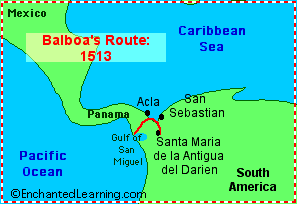
Vasco Nunez was not only an Explorer but he was also a conquistador who helped define the well-known Panama today. He was born around 1475 in Spain. There was once a time when many people in Spain were seeking their fortunes in the New World, and everyone was searching anything that they could get their hands that would increase the riches and wealth. These people were obsessed, as some would think of it as. Nunez was one of the first that joined an expedition to South America. After exploring the coast of present-day Colombia, Nunez stayed on the island of Hispaniola. Today, we all know that as Haiti and the Dominican Republic, according to the map we did for homework, where we had to label regions. But while there, he got into debt and fled, hiding away on a ship headed for the fledgling colony of San Sebastian. Compared to Columbus, Vasco Nunez did not have anyone as generous as King Isabella and King Ferdinand to sponsor his trip with many, or anything that he needed. Eventually, he figured a way out of the problems he was facing.

Once he arrived at the settlement, Nunez discovered that most of the colonists had been killed by nearby native peoples. He then convinced the remaining colonists to move to the western side of the Gulf of Uraba. With not much to lead himself upon, they established the town of Darién on the Isthmus of Panama, which is a small strip land that connects Central America and South America. Today, that land is known as simply Panama, and nothing complicated as the Isthmus of Panama.

Around 1513, Nunez led an expedition from Darién to search the south for gold. Once again, he became one of those influential explorers that had another obsession for Gold, and his own share of it. He hoped that if he was successful he would win the favor of Ferdinand, the king of Spain, even though the Queen and King were not even close to sponsoring his trip. Unfortunately, he did not find any Gold. Although he did not find any Gold, he claimed Pacific Ocean and all of its shores for Spain.


The word quickly spread  that Nunez did not find the "so-called" Gold. That made his weakness of being a failure,highlighted. Immediately as the news followed, the king had sent Pedro Arias de Ávila to serve as the new governor of Darién. The new governor was reportedly jealous of Balboa and ordered him to be arrest on charges of treason.He shouldn't of been jealous because after all he did take the position of Nunez, which was to lead an expedition. Additionally, he was also perceived as a failure because he did not find any Gold, and everyone was obsessed about Gold. After a brief trial, Balboa unfortunately died in 1519.

Saturday, August 18, 2012

Setting the Soil for the Food That Ends Up On Our Table Today


The Planting of English America

1. Colonization in England began in the focusing from the 1500-1733. Great Britain wanted to establish colonies in order to have natural resources for its industries and as market places for the industrial products, which were considered essentially valuable. The government really had few restrictions on who could settle in the American colonies. As long as the colony was profitable, the colonists were pretty much left alone to develop their own colony. This meant that different people could settle in the British colonies without fear of interference with their political beliefs or religious beliefs.

4. In the 2500s, the woolen districts located in England were drastically hit upon hard times economically, and workers lost their jobs. The younger sons often were pressured to migrate the US because the older siblings were the only the only ones that were able to inherit land. It created a wave of change of the percentage of the population that would be rich. The economy of Virginia and other southern colonies heavily relied on slavery. Maryland was considered to be a refugee for Catholics and slaves.  In 1712, North and South Carolina separated officially. This caused conflict when it came to slavery and it automatically made Georgia the buffer colony for runaway slaves.

5. The following are similarities among the Southern colonies of Virginia, Maryland, North Carolina, South Carolina, and Georgia.
-Agriculture was the primary focus of their society

I organized the similarities and differences to make it easier to compare the similarities and differences in the Southern Colonies
Similarities and Differences in Southern Colonies
·         Slavery trade was growing at an alarming because Africans were perceived as capable to overcome diseases.
·         Schools, churches, and even towns, were often stopped from development since Southerners were so spread out.
·         Crops were grown as such:
·         Tobacco - in the Chesapeake region (Virginia, Maryland, North Carolina)
·         Rice and indigo - in the tidewater region of South Carolina and Georgia
·         As a general rule, the plantation South permitted a good deal of religious freedom. Southerners were more interested in making money and growing crops than worrying over church doctrine.
·         White vs. Indian conflicts was frequent.

A New World, A New Beginning


New World Beginnings

1.      History began being recorded an estimate of 6,000 years ago but, the Europeans did not dare to setting foot on land  not until the beginning of 1450, due to a differentiating stage and ambient. Pangaea has geographically structured up to today, our home, planet Earth. The theory behind the well- known Pangaea states that the continents were once nestled together into one mega-continent. As time progressed by, the continents slowly begin to spread out as drifting islands, and created the structure in which they are today, meaning that they have not experienced any movements since Pangaea. All this movement to Earth’s surfaces was the eventful outcome of the Appalachian and Rocky Mountains and the Great Ice Age thrust down over North America and scoured the present day American Midwest. As the Great Ice Age diminished, so did the glaciers over North America.
35,000 years ago, the Land Bridge Theory emerged linking Asia and North America across what is now known as the Bering Sea. People were said to have walked across the "bridge" before the sea level rose and sealed it off; thus populating the Americas.

2.      The Origin and development for the major Indian culture of the Americas started after a while but due to diseases attacking Indians, brought them to their extinction. The development of Indians began with the Incas, Mayas, and the Aztecs. Maize was highly popular and was basically the main product that arrived to the US around 1,200 B.C. Up until the present day, we until use maize or “corn” and in many households has become a well-known food on our dinner tables. The vast majority of people settled down to worked as farmers, and when the right opportunity came by they decided to begin building adobe homes.

3.      After the arrival of surprising of Christopher Columbus in 1492, conflicts and changes begin to erupt when the diverse world of Europe, Africa, and the Americas collided. After 30 dreadful days, he had generally assumed of reaching the East Indies and therefore mistook the people as “Indians.”  In the Americas, the culture was immediately being changed up by the European invading their land. The Indian people of the New World were divided into numerous diverse cultures speaking more than two thousand different languages. Religion wise, the Indians were forced to assimilate to Christianity, forced into slavery on the plantations, and men and women were often conflicted by the matrilinear conflict.