- Is human nature fundamentally good or bad
- Can legislation change human behavior?
- Should we seek gradual or immediate changes to society?
- Can society be improved by active involvement or by withdrawal?
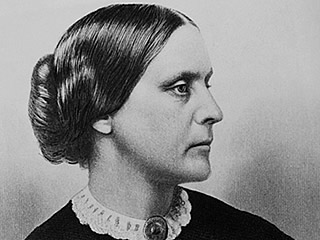
- What makes the good society?People who represent the Feminism and Abolitionist movements. Legislation can change the human behavior because the laws that they decide will take a tremendous effect on the individual. They will also determine her woman's right swill be placed upon in the future.The good and evil that you see don't even exist in reality, at least not outside of the mind that believes in them. They are only judgments passed by the individual from their own unique perspective. What one person sees as bad or evil may seem to be the only logical thing to do from some other perspective. The ideas of both good and evil are point of view specific. This is why people like bush and bin laden are either loved or hated. Bush was seen as good by people who shared his fear based thought system. Those who have a compassionate concern for all Accomplishments:In the 1800s most girls did not receive a formal education. But, Susan B. Anthony's father, Daniel, as a 6th generation Quaker, believed in equal treatment for boys and girls. Consequently, Susan and her three sisters had the same opportunity for advanced education as her two brothers. Susan was fortunate enough to be given the chance to attend a private Quaker boarding school in Philadelphia.
- Founded the National Woman's Suffrage Association in 1869 with life-long friend Elizabeth Cady Stanton. Together they worked for women's suffrage for over 50 years.
- Published "The Revolution" from 1868-1870, a weekly paper about the woman suffrage movement whose motto read, "Men their rights and nothing more, women their rights and nothing less.
- First person arrested, put on trial and fined for voting on November 5, 1872. Unable to speak in her defense she refuse to pay "a dollar of your unjust penalty."
- Wrote the Susan B. Anthony Amendment in 1878 which later became the 19th Amendment giving women the right to vote.
- Helped found the National American Woman's Suffrage Association in 1890 which focused on a national amendment to secure women the vote. She served as president until 1900.
- Compiled and published "The History of Woman Suffrage (4 vols. 1881-1902) with Elizabeth Cady Stanton and Matilda Joslyn Gage.
- Founded the International Council of Women (1888) and the International Woman Suffrage Council (1904) which brought international attention to suffrage.
- An organization genius -- her canvassing plan is still used today by grass root and political organizations.
- Gave 75-100 speeches a year for 45 years, traveling throughout the the United States by stage coach, wagon, carriage and train.
- Led the only non-violent revolution in our country's history -- the 72 year struggle to win women the right to vote.

No comments:
Post a Comment